- They sit in the background of a dish, adding depth without ever demanding attention.
- The Red Tropea Onion is something else entirely.
- Grown along the Tyrrhenian coast of Calabria in southern Italy, this is an onion that stops you mid-bite — sweet, aromatic, and layered in a way that no ordinary onion can replicate.
- The answer goes deeper than flavor alone.
- It Starts With the Soil The Red Tropea Onion grows in alluvial soil deposited over centuries by rivers descending from the Calabrian mountains.
Most onions are an afterthought. They sit in the background of a dish, adding depth without ever demanding attention. The Red Tropea Onion is something else entirely. Grown along the Tyrrhenian coast of Calabria in southern Italy, this is an onion that stops you mid-bite — sweet, aromatic, and layered in a way that no ordinary onion can replicate.
But what exactly makes it different? The answer goes deeper than flavor alone.
It Starts With the Soil
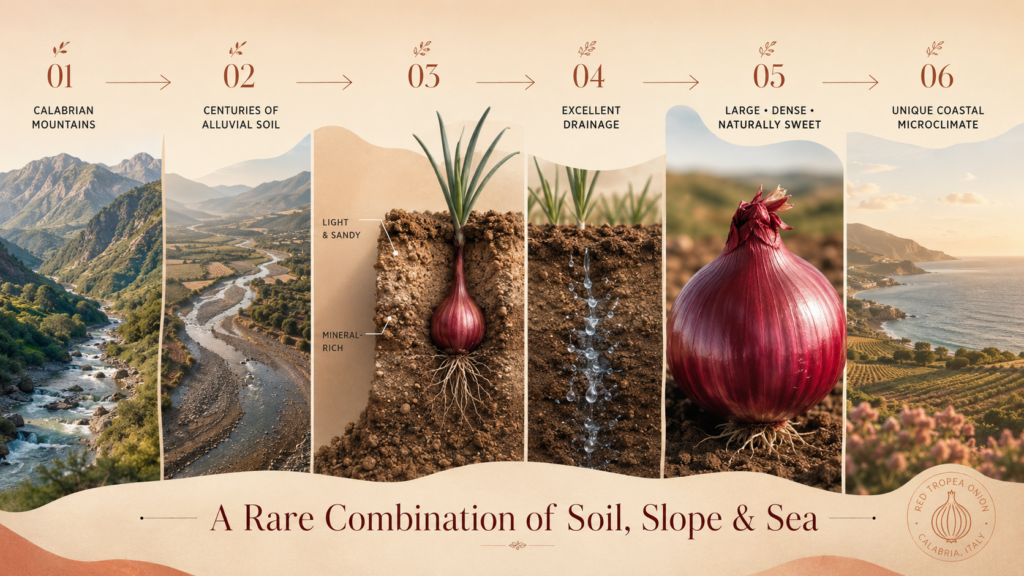
The Red Tropea Onion grows in alluvial soil deposited over centuries by rivers descending from the Calabrian mountains. This soil is unusually light, sandy, and mineral-rich — conditions that allow the bulb to develop without resistance, growing large, uniform, and dense with natural sugars.
Alluvial soil also drains exceptionally well, preventing waterlogging and concentrating flavor compounds in the bulb itself. Furthermore, no other region in Italy — or the world — replicates this precise combination of soil composition, slope, and coastal microclimate.
The Water Source Changes Everything
The Tropea growing zone draws irrigation from pristine mountain water descending from the Calabrian Apennines. This water is exceptionally clean, low in minerals that cause bitterness, and consistent in temperature throughout the growing season.
As a result, the onion develops without the harsh sulfurous compounds that make most varieties sharp and eye-watering. Consequently, what you get is a bulb that is genuinely mild enough to eat raw — something most onions simply cannot offer.
Brix Levels That Set a New Standard
Brix is the measure of sugar content in fruit and vegetables. Most common onions measure between 4 and 6 on the Brix scale. The Red Tropea Onion regularly measures between 7 and 9 — occasionally higher in peak season.
This is not sweetness for its own sake. Higher Brix reflects a denser concentration of natural compounds — sugars, yes, but also the aromatic molecules that give Tropea its distinctive character. In short, Brix tells you that something genuinely different is happening inside this onion at a chemical level.
Aroma That Is Entirely Its Own
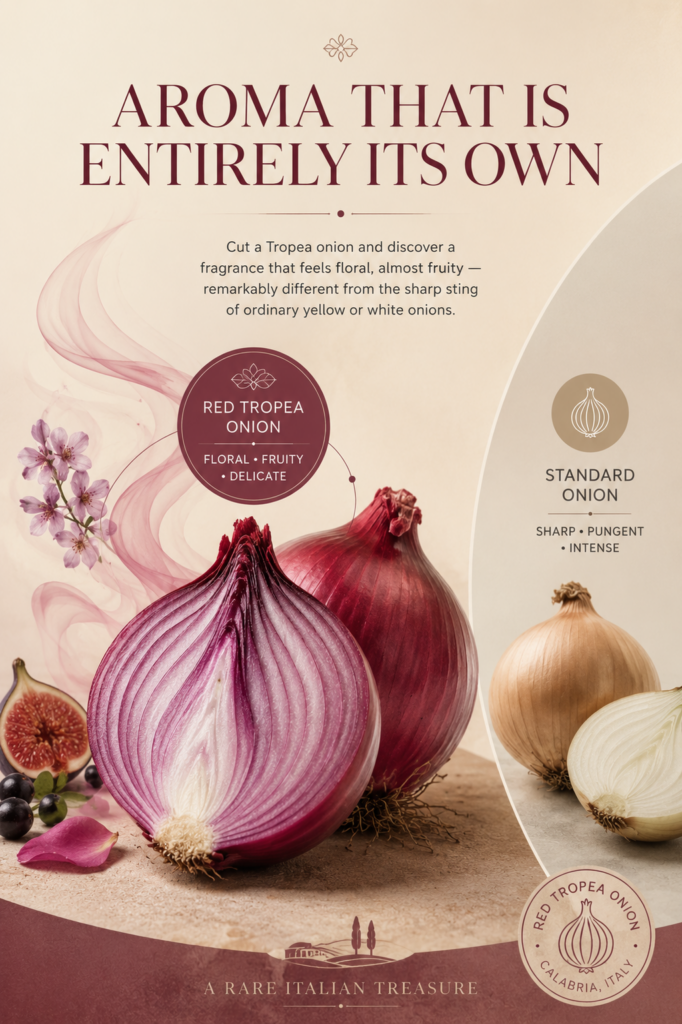
If there is one quality that separates the Red Tropea Onion most dramatically from its competitors, it is aroma. Cut a Tropea onion and the scent is floral, almost fruity — nothing like the sharp sting of a standard yellow or white onion.
This aroma comes directly from the soil and water conditions described above. The alluvial mineral profile and clean mountain water suppress the volatile sulfur compounds responsible for pungency in ordinary onions. Instead, the Tropea develops a softer aromatic profile — one that actually enhances a dish rather than overpowering it.
Chefs across Italy and increasingly across the US seek it out specifically for this reason.
Protected Status for Good Reason
The Red Tropea Onion carries IGP status, Indicazione Geografica Protetta — under EU law. This designation means only onions grown in the designated Tropea zone of Calabria can legally carry the name. Therefore, when you source authentic Red Tropea Onions, you are not simply buying a variety — you are buying a verified place, a verified process, and a verified result.
How Italians Cook With It
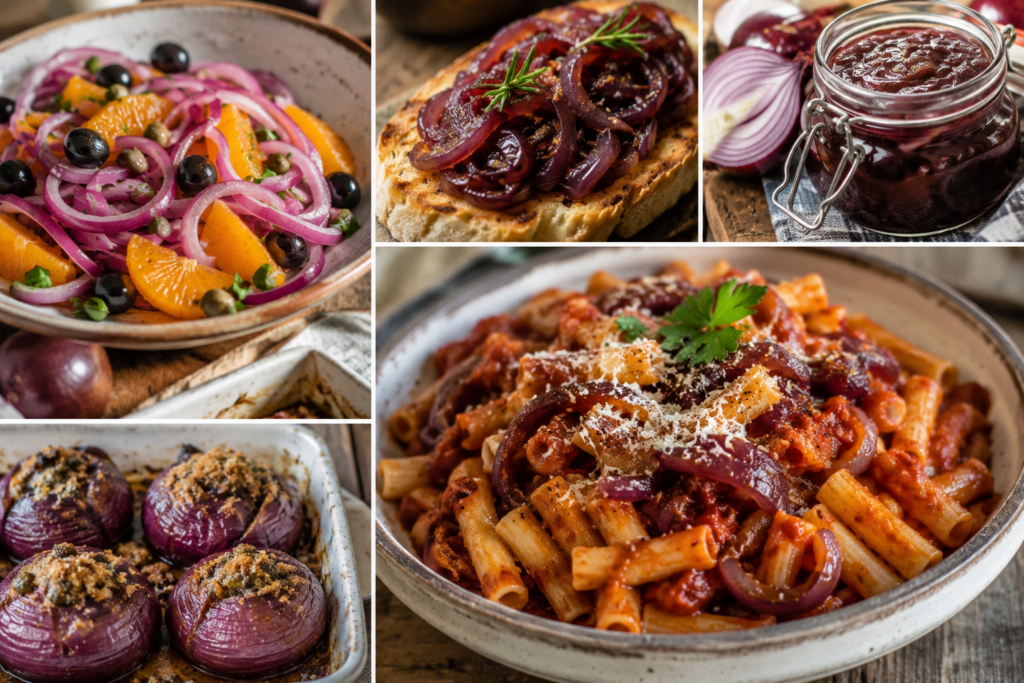
The Red Tropea Onion’s natural sweetness and mild aroma open up a range of uses that standard onions simply cannot match. In Calabria, it appears on the table in many forms:
- Raw in salads — thinly sliced with oranges, olives, and extra virgin olive oil — a classic Calabrian combination
- Caramelised — it reaches deep, jammy sweetness in minutes without added sugar, making it ideal over bruschetta or grilled meats
- Balsamic-preserved — slow-cooked in red wine vinegar and honey for an agrodolce condiment that keeps for weeks
- Baked whole — stuffed with breadcrumbs, anchovies, and capers in the Sicilian tradition
- In pasta — paired with ‘nduja, pecorino, and cherry tomatoes for a distinctly southern Italian sauce
Each preparation reveals a different dimension of the onion and in every case, the Tropea’s aroma and sweetness make the dish noticeably better than any substitute would.
At BellaVita Foods, we work directly with Italian growers to bring authentic, seasonal produce — including the Red Tropea Onion — to the US market, with full traceability from field to shipment.
Because an onion this different deserves to be treated differently.
Explore BellaVita’s premium Italian vegetables at bellavitafoods.com.