- If you ask most people outside Italy to name an Italian onion, they will say Tropea.
- And fair enough — the Red Tropea is extraordinary and deserves every bit of attention it gets.
- But there is another Italian onion that quietly does something completely different, and almost nobody outside of Italy talks about it seriously.
- Small, flat, golden, and so naturally sweet it practically caramelises itself before you have done anything interesting.
- This is the onion that Italian home cooks reach for when they want something the Tropea simply cannot do and it is genuinely about time the rest of the world caught up.
If you ask most people outside Italy to name an Italian onion, they will say Tropea. And fair enough — the Red Tropea is extraordinary and deserves every bit of attention it gets. But there is another Italian onion that quietly does something completely different, and almost nobody outside of Italy talks about it seriously.
The Cipolline Borettane. Small, flat, golden, and so naturally sweet it practically caramelises itself before you have done anything interesting. This is the onion that Italian home cooks reach for when they want something the Tropea simply cannot do and it is genuinely about time the rest of the world caught up.
What They Actually Are
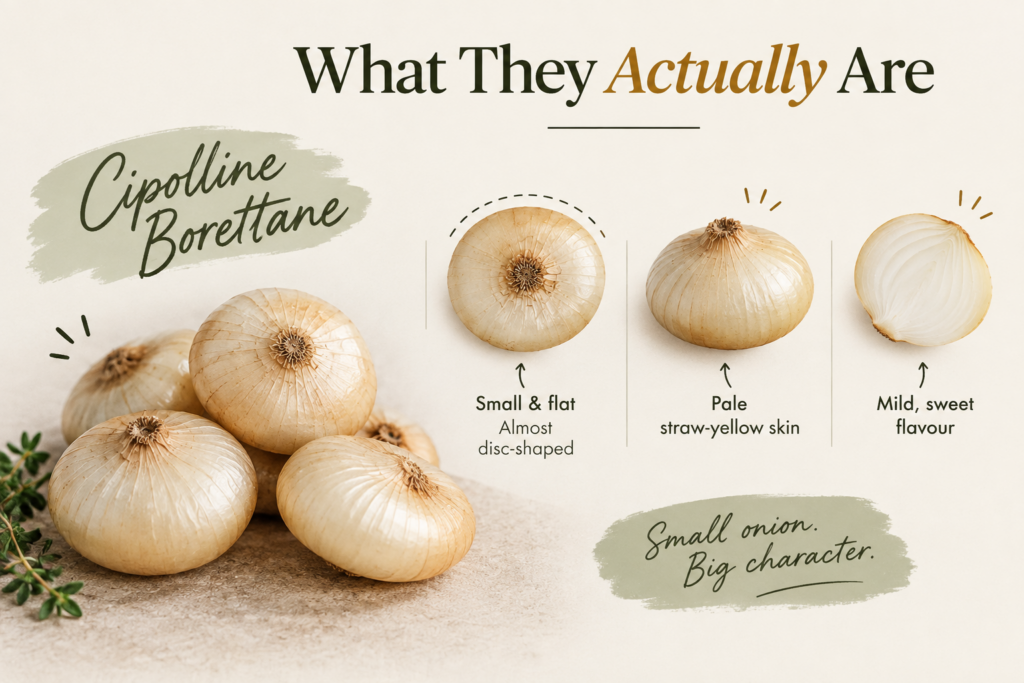
Cipolline Borettane are small, flat onions, almost disc-shaped — with pale straw-yellow skin and a mild, sweet flavour that sets them apart from every round onion you have ever cooked with. The name comes from Boretto, a small town in the province of Reggio Emilia in the Po Valley, where they have been grown for centuries.
They are not a new variety or a food trend. They are a deeply rooted part of northern Italian agricultural life that has survived precisely because they do something nothing else does quite as well. That kind of staying power usually means something.
The Flavour Is the Whole Point
The Cipolline Borettane has a noticeably higher natural sugar content than most standard onion varieties. This is not subtle — you feel it the moment they hit a warm pan. They caramelise faster, deeper, and more evenly than round onions, turning jammy and golden without any added sugar or especially long cooking time.
Their flat shape also helps more than you might expect. Maximum surface contact with the pan means every part of the onion is touching the heat at once. The result is even browning, consistent texture, and a depth of flavour that standard onions take considerably longer to reach — if they get there at all. It is a small design detail that makes a real practical difference.
Why They Are Different From Other Small Onions
Pearl onions and shallots often get mentioned in the same breath as Cipolline Borettane. The comparison does not really hold up.
How do they compare?
Select an attribute to see how each onion stacks up
They genuinely occupy their own category. Once you cook with them properly, substituting something else feels like a noticeable step backwards.
How Italians Actually Use Them
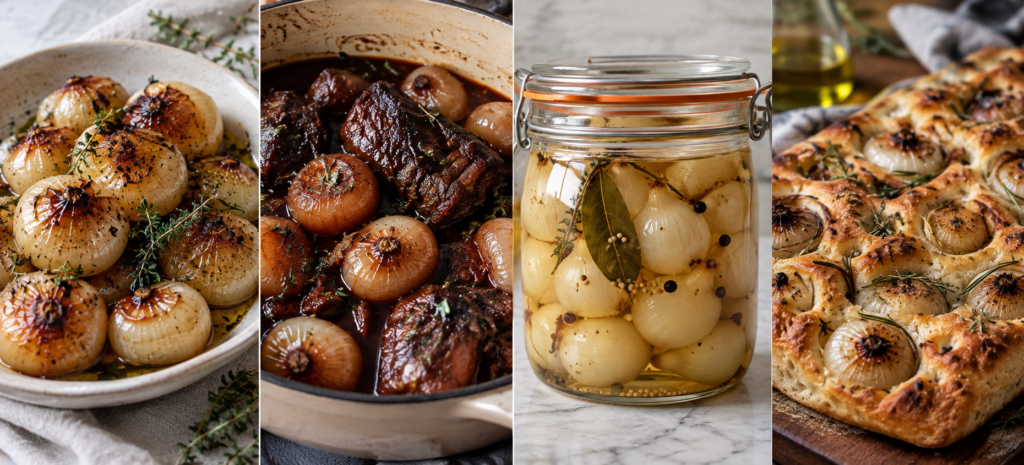
In northern Italy, Cipolline Borettane appear most famously in agrodolce — the sweet and sour preparation that belongs to one of the great Italian condiment traditions. Cooked slowly in red wine vinegar, a little sugar, and butter until glossy and completely tender, they become something that works alongside roasted meats, on a cheese board, or simply eaten straight from the pan with good bread and no apology.
Beyond agrodolce, they are excellent in several other ways worth knowing:
- Roasted whole with thyme, olive oil, and balsamic until soft all the way through
- Braised in red wine alongside short ribs or slow-cooked pork shoulder
- Pickled in white wine vinegar for a sweet, crunchy condiment that keeps for weeks in the fridge
- Scattered over focaccia before baking, where they soften into the dough and make the whole thing taste noticeably better
Underrated Is Genuinely the Right Word
The Cipolline Borettane does not have the visual drama of a deep burgundy Tropea or the name recognition of a French shallot. It is small, unassuming, and easy to overlook at the market. But cook it once — properly, in a wide pan with a little butter and patience and the conversation shifts immediately. People always ask what you did differently.
At BellaVita Foods, we source Cipolline Borettane directly from Po Valley growers and bring them to the US market — because an onion with this much quiet character deserves to be found by the people who will actually know what to do with it.
Explore BellaVita’s Italian vegetables at bellavitafoods.com.