- Long before lemons and oranges conquered the world’s fruit bowls, the citron stood alone as the grandfather of all citrus fruits.
- Known in Italy as cedro, this extraordinary fruit has thrived across the Mediterranean for thousands of years.
- Moreover, Italy remains one of its most passionate and skilled custodians today.
- If you’ve never heard of citron, you’re about to discover why the rest of the world is finally catching up to what Italians have always known.
- The citron (Citrus medica) is one of the three original “parent” citrus fruits from which nearly every modern variety — lemons, limes, oranges — ultimately descends.
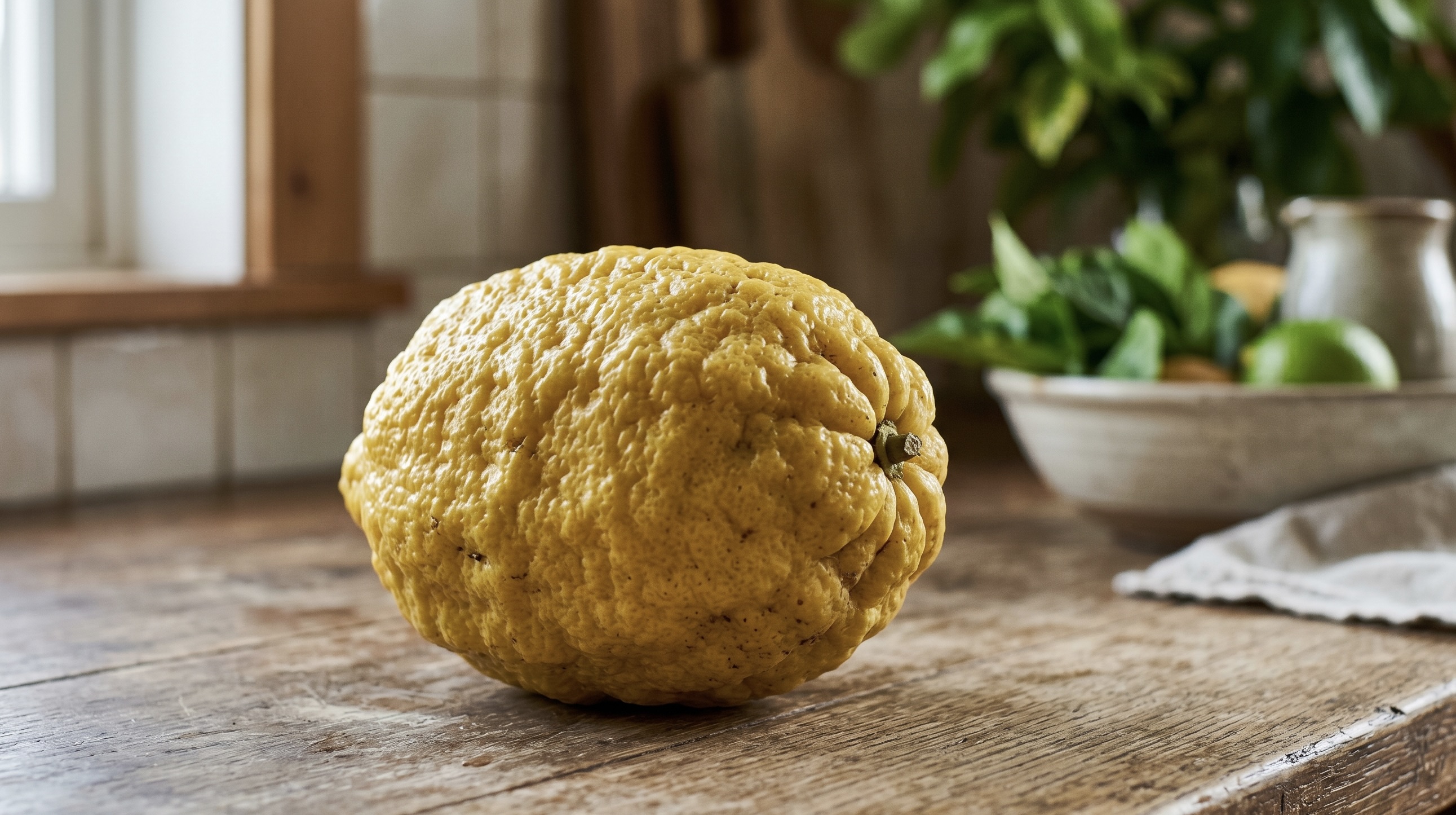
Long before lemons and oranges conquered the world’s fruit bowls, the citron stood alone as the grandfather of all citrus fruits. Known in Italy as cedro, this extraordinary fruit has thrived across the Mediterranean for thousands of years. Moreover, Italy remains one of its most passionate and skilled custodians today. If you’ve never heard of citron, you’re about to discover why the rest of the world is finally catching up to what Italians have always known.
What Exactly Is a Citron?
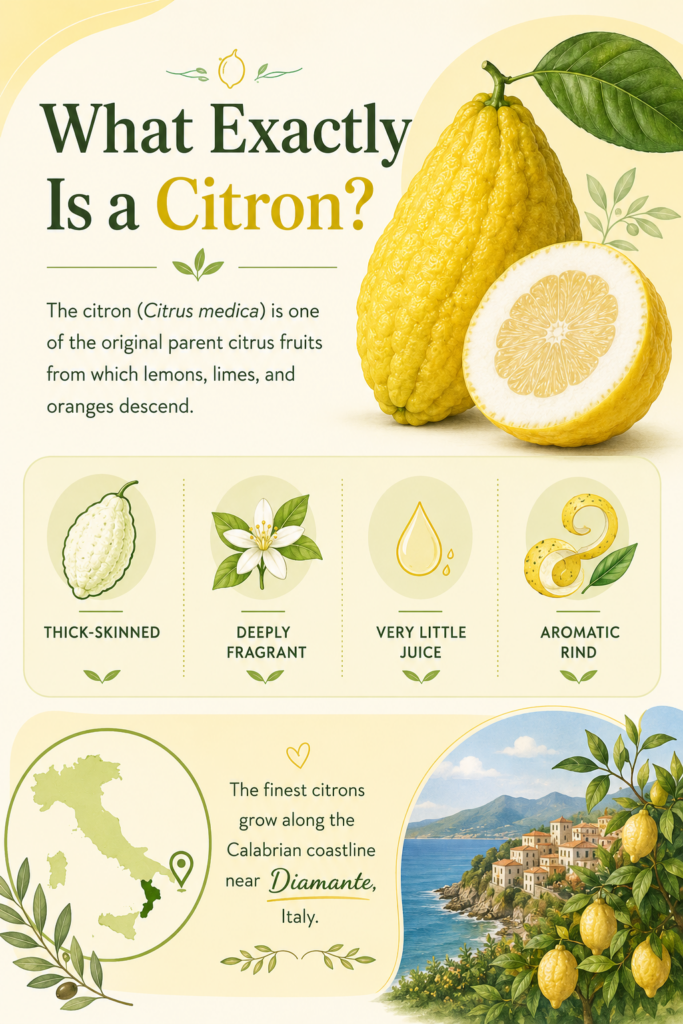
The citron (Citrus medica) is one of the three original “parent” citrus fruits from which nearly every modern variety — lemons, limes, oranges — ultimately descends. Furthermore, it’s large, deeply fragrant, and extraordinarily thick-skinned, with very little juice but an incredibly aromatic rind. As a result, cooks, perfumers, and artisans consider it irreplaceable across centuries of tradition.
In Italy, the finest citrons grow along the Calabrian coastline, particularly around the town of Diamante. There, warm Mediterranean sunshine and mineral-rich volcanic soil together produce fruit of truly exceptional character.
A Fruit With Ancient Roots
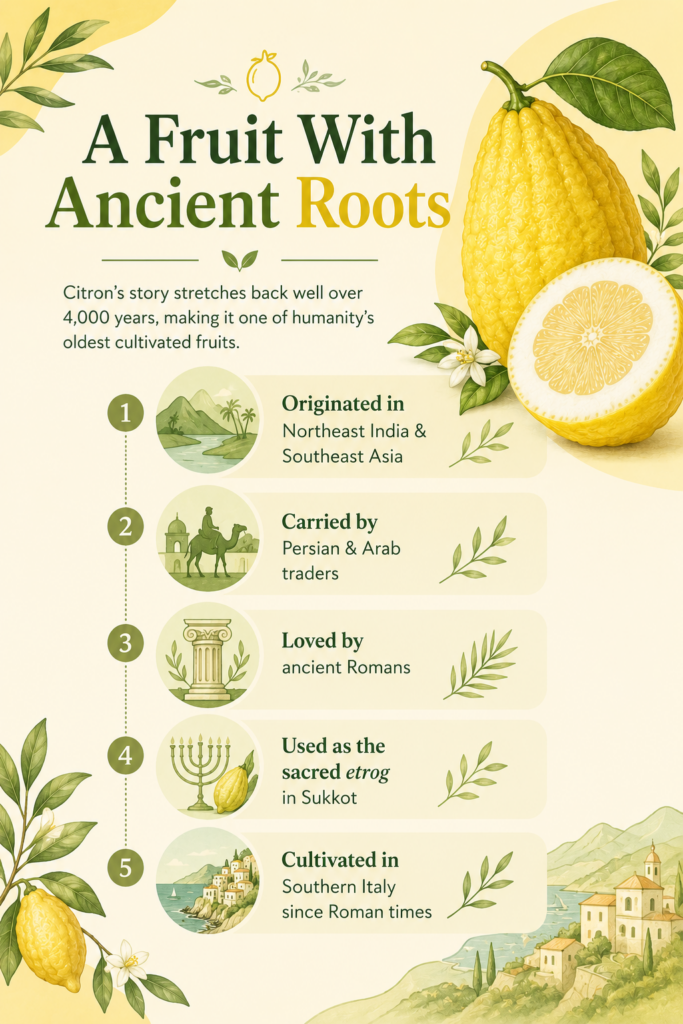
Citron’s story stretches back well over 4,000 years, making it one of humanity’s oldest cultivated fruits. Specifically, its journey unfolded like this:
- First, it originated in Northeast India and Southeast Asia
- Then, Persian and Arab traders carried it to the Middle East and Mediterranean
- Later, ancient Roman writers documented it as a rare luxury ingredient
- Additionally, Jewish tradition adopted it as the sacred etrog during the Sukkot festival
- Finally, southern Italy embraced it and never let go — cultivating it continuously since Roman times
Consequently, Italy didn’t simply adopt the citron, it refined, protected, and elevated it into something truly world-class.
Why Italian Citron Stands Apart
The Cedro di Diamante from Calabria proudly carries IGP certification (Protected Geographical Indication). This European quality mark guarantees origin, authenticity, and traditional production methods. Therefore, for importers and buyers worldwide, it represents the gold standard in premium citrus.
| Feature | Ordinary Citron | Italian Cedro (Diamante) |
|---|---|---|
| Rind Thickness | Moderate | Exceptionally thick and fragrant |
| Pith Flavour | Bitter | Mild, sweet, almost edible raw |
| Aroma Profile | Basic citrus | Intensely floral and complex |
| Primary Use | Zest or juice | Candied peel, liqueur, raw slices |
| Quality Certification | None | IGP Protected |
In short, this isn’t just fruit. It’s a living heritage product with a compelling story behind every peel.
How Italians Use Citron Every Day
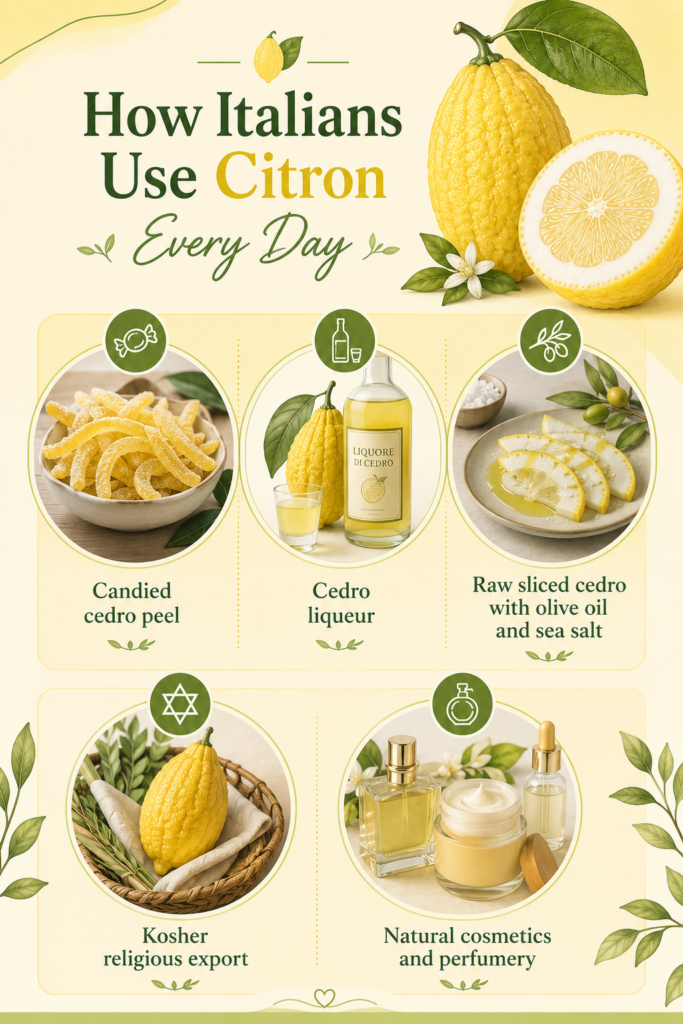
Unlike most citrus fruits, Italian tradition celebrates the citron almost entirely for its rind and pith rather than its juice. Here’s specifically where that tradition shines brightest:
- Candied cedro peel — an essential ingredient in panettone, Sicilian cassata, and artisan pastries nationwide
- Cedro liqueur — a bright, refreshing digestivo that producers craft along the Calabrian and Amalfi coasts
- Raw sliced cedro with olive oil and sea salt — a beloved Calabrian antipasto with zero pretension and maximum flavour
- Kosher religious export — Italian growers ship citrons globally each year for the Jewish Sukkot celebration
- Natural cosmetics and perfumery — luxury brands across Europe prize the cold-pressed essential oil highly
Nutritional Value Worth Knowing
Beyond taste and tradition, citron also delivers genuine wellness benefits. It naturally supplies Vitamin C and plant-based antioxidants. Additionally, the thick pith offers valuable dietary fibre, while bioactive limonoids actively support anti-inflammatory responses in the body. Furthermore, both Calabrian folk medicine and Ayurvedic herbalism have long relied on citron for digestive health and immunity.
A Premium Export Opportunity
Global demand for authentic, IGP-certified Italian produce continues to rise sharply. Moreover, Italian citron occupies a unique high-value niche — culturally significant, agriculturally superior, and fully traceable. Therefore, distributors, food manufacturers, and specialty importers who source directly from Calabria gain access to a product that no other region on earth can genuinely replicate.
5 FAQs About Citron
1. What does citron taste like? The rind is fragrant and mildly sweet, while the flesh is quite dry and sour — so the peel does most of the culinary work.
2. Is citron the same as a lemon? No. Citron is the ancient ancestor of the lemon — larger, thicker-skinned, far less juicy, and far more aromatic.
3. Where does the world’s best citron come from? The Cedro di Diamante from Calabria, Italy, earns global recognition as the finest and most sought-after variety available.
4. Can you eat citron raw? Absolutely — thinly sliced citron dressed with extra virgin olive oil and salt is a classic Calabrian starter that locals enjoy regularly.
5. Why do food exporters prefer Italian citron? IGP certification, consistent quality, and rich cultural heritage make Italian cedro the premium choice for confectionery, liqueur, and religious markets worldwide.
Ready to source premium Italian citron? BellaVita Foods supplies IGP-certified cedro directly from Calabria to US distributors and retailers. Explore our Citron →