- Most people associate pumpkin with one thing — Halloween.
- The big orange ones that sit on porches, get carved into faces, and end up as canned puree in a pie.
- The Delica pumpkin is something else entirely.
- This small, dark green Italian variety has been a fixture in professional kitchens across Italy for decades.
- And now, as autumn settles in across the US, more American chefs and home cooks are discovering what Italian kitchens have known all along, the Delica is simply the best pumpkin to actually eat.
Most people associate pumpkin with one thing — Halloween. The big orange ones that sit on porches, get carved into faces, and end up as canned puree in a pie. That version of pumpkin is fine. The Delica pumpkin is something else entirely.
This small, dark green Italian variety has been a fixture in professional kitchens across Italy for decades. And now, as autumn settles in across the US, more American chefs and home cooks are discovering what Italian kitchens have known all along, the Delica is simply the best pumpkin to actually eat.
What Does a Delica Pumpkin Look Like?
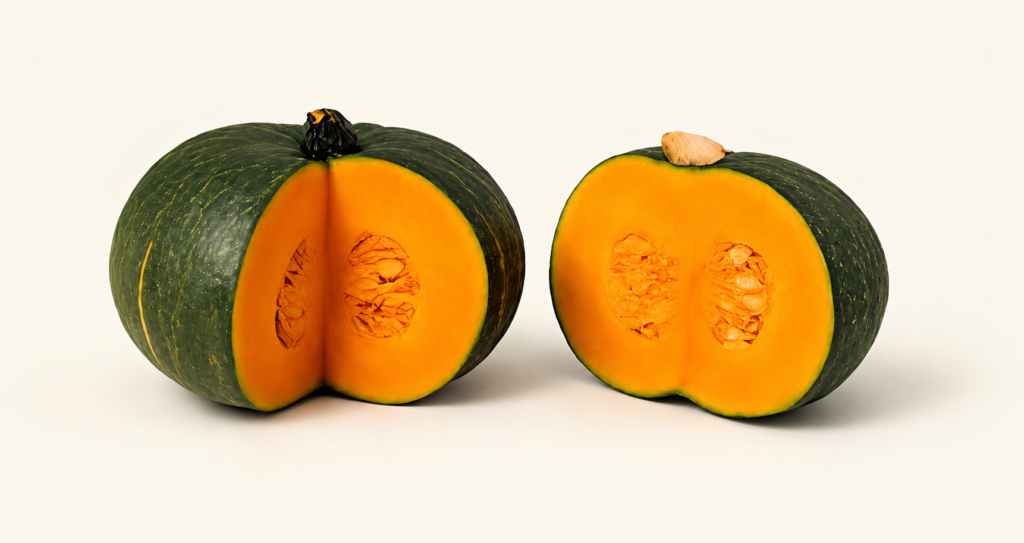
The Delica looks nothing like a standard pumpkin. It is small and flat, with a deeply ribbed dark green skin that almost looks grey in certain light. Honestly, it looks more like a decorative gourd than something you would cook with.
Then you cut it open. Inside, the flesh is a deep, rich orange — dense, dry, and fragrant. Furthermore, the skin is thin enough to eat after roasting, which means less peeling and less waste. For busy home cooks and professional chefs alike, that is a genuine bonus.
Why Does the Delica Taste So Much Better?
This is the question that matters most. And the answer comes down to one thing, how it was bred.
Most commercial pumpkins are selected for size, shelf life, and appearance. The Delica was developed in Italy with a completely different priority, flavour. Specifically, sweetness, density, and a depth of taste that holds up through cooking rather than disappearing into the background.
The flesh is noticeably drier than most squash varieties. As a result, it roasts rather than steams — building caramelised, slightly crisp edges while staying tender and creamy at the centre. Additionally, its natural sugar content means it tastes genuinely sweet without any added sugar or heavy seasoning. The Delica simply tastes like itself. In autumn cooking, that is more than enough.
How Chefs Actually Use It
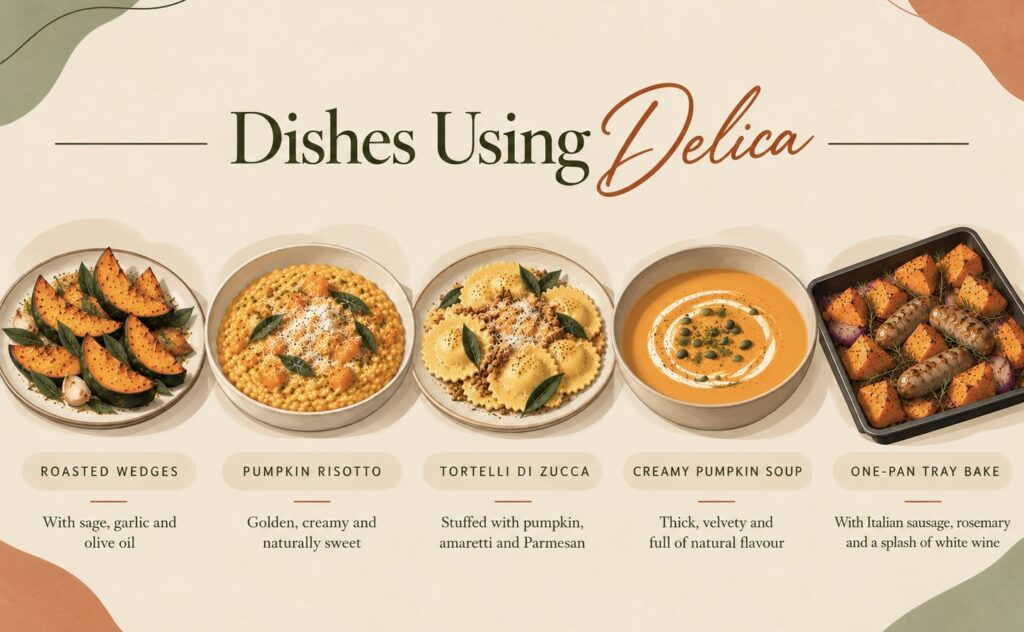
In northern Italian kitchens, the Delica appears on the menu from September through November. Moreover, it moves across the menu with remarkable ease — from starter to main to side dish, it adapts to almost anything autumn cooking throws at it.
Here is how both professional chefs and home cooks in Italy use it most:
- Roasted wedges — with sage, garlic, and olive oil until the edges caramelise and the skin softens to something almost buttery
- Pumpkin risotto — the flesh blends into the cooking stock, turning the whole dish golden and naturally sweet
- Tortelli di zucca — the famous Mantuan stuffed pasta with pumpkin, amaretti biscuits, and Parmesan inside fresh pasta parcels
- Creamy pumpkin soup — it thickens naturally without cream or flour, thanks to that dense, dry flesh
- One-pan tray bake — with Italian sausage, rosemary, and a splash of white wine, an easy weeknight dinner that genuinely impresses
Each of these works because the Delica holds its shape and flavour through heat. It does not turn watery or bland. Consequently, it pairs naturally with the bold flavours of autumn cooking — cured meats, aged cheeses, bitter greens, and wine-based sauces.
Why Now Is the Right Time to Try It
The Delica is a seasonal variety. It arrives in September, peaks through October, and starts winding down by late November. Therefore, if you want to try the finest Italian pumpkin at its actual best, right now is the window.
Seasonal eating is not just an Italian philosophy — it is simply how food tastes best. And the Delica in autumn, at peak ripeness, is proof of that.
At BellaVita Foods, we source Delica pumpkins directly from Italian growers and bring them to the US market during their natural autumn harvest. Because an ingredient that Italian chefs reach for every October deserves a place on American tables in October too.
Explore BellaVita’s Italian seasonal produce at bellavitafoods.com.