- You cut into a fresh cantaloupe, and the first bite is pure perfection, sweet, juicy, and packed with flavor.
- But have you ever wondered what makes one melon a masterpiece and another, well, just okay?
- It’s a secret recipe crafted by nature itself, and in this article, we’ll tell you exactly what that is.
- It’s all explained by the science of sweetness.
- The secret behind these amazing melons is something called terroir.
You know that moment. You cut into a fresh cantaloupe, and the first bite is pure perfection, sweet, juicy, and packed with flavor. But have you ever wondered what makes one melon a masterpiece and another, well, just okay? It’s not luck. It’s a secret recipe crafted by nature itself, and in this article, we’ll tell you exactly what that is. It’s all explained by the science of sweetness.
What Makes It a Masterpiece?
The secret behind these amazing melons is something called terroir. It’s a fancy French word, but the idea is simple. It’s the unique combination of land, climate, and geography that gives a particular fruit its one-of-a-kind characteristics. When you taste a melon from the Po River Valley, you’re tasting its terroir, the sun, the soil, and a whole lot of Italian charm.
The Ingredients of Terroir
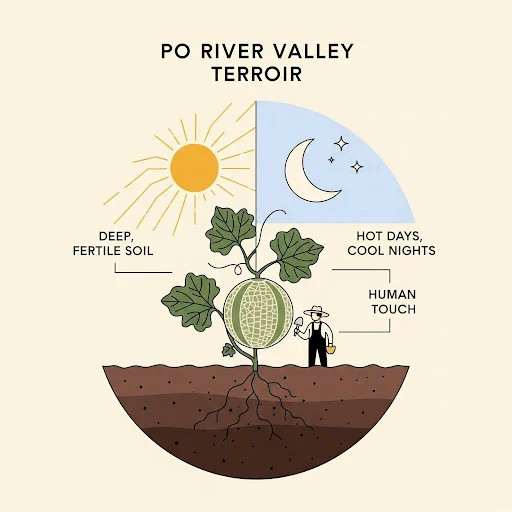
The Po River Valley in northern Italy isn’t just a location; it’s a character in the story of these melons. This isn’t your average farmland. It’s a landscape with a powerful blend of ingredients that work together to create magic.
- The Soil: The Po River has been enriching this land for centuries, leaving behind a deep, fertile soil that’s a natural powerhouse of nutrients. This rich earth acts like a perfect meal for the melon plants, giving them a strong foundation and a flavor you can truly taste in every bite.
- The Climate: This region’s climate is Mother Nature’s secret weapon. The days are long and warm, soaking the melons in generous Italian sunshine to help them ripen and develop. Then, as evening falls, the temperature drops. This daily shift from hot to cool is crucial. During the day, the melon plants are busy making sugars. At night, when it’s cooler, they rest, and the sugars get to work, concentrating and intensifying the fruit’s sweetness. It’s a natural process that builds flavor and aroma.
- The Human Touch: The final ingredient in this recipe is the passion of the farmers themselves. They’ve been growing melons on this land for generations, passing down a deep understanding of the soil and climate. Their expertise allows them to work with nature, not against it, ensuring the final product lives up to its heritage.
More Than Just Sweetness

As if you needed another reason to love this delicious fruit, it’s also packed with incredible health benefits. These Italian melons are a sweet, satisfying treat that’s also doing your body a world of good.
- Vitamin C Powerhouse: These melons are packed with Vitamin C, which is fantastic for giving your immune system a boost and helping your skin look radiant.
- Ultimate Hydration: With over 90% water content, a slice of cantaloupe is a delicious and refreshing way to stay hydrated, especially on a warm day.
- Supports Healthy Vision: The melon’s vibrant orange color is from beta-carotene, a powerful antioxidant that’s fantastic for your eye health.
The Art of Selection

Even with the best natural conditions, a great melon still needs a touch of human genius. These cantaloupes aren’t picked by the calendar, their harvest is an art. Growers rely on their senses, knowing by the smell, the color, and the feel of the rind when each melon has reached perfect ripeness.
Prior to shipment, each melon undergoes a meticulous process. They are weighed, sorted by size, and scanned using laser near-infrared (NIR) spectroscopy to measure sugar content (Brix). A wax seal is applied to the melon stems to further extend their shelf life and protect against stem decay.
This careful attention ensures every melon is bursting with flavor and has just the right texture. With each one tested for sweetness, you can be sure that the natural magic of the Po River Valley reaches you at its absolute best.
How to Tell If a Melon Is Ripe:
To check if a melon is ready to eat, gently inspect the base of the stem. A ripe melon will often show signs of natural detachment, where the stem begins to separate cleanly from the fruit. In addition, a sweet, fragrant aroma—especially at the stem end—is a strong indicator of ripeness. If both are present, the melon is likely at peak flavour and ready to enjoy.
The Science You Can Taste

So, the next time you enjoy a slice of sweet, juicy cantaloupe, take a moment to appreciate the journey it made. It’s a taste that tells a story, a story of fertile soil, warm Italian sunshine, and generations of farming expertise. This isn’t just some fruit; it’s a direct connection to a place and a process that has been perfected over time. It’s a delicious piece of edible science.
If you’re ready to taste the difference yourself, you can find these exceptional Italian melons at bellavitafoods.com