
- A change in season changes what grows and what makes its way onto the menu.
- In an Italian kitchen during autumn, that shift might mean Delica pumpkin roasting until its edges caramelise, chestnuts simmering into soup and cipolline borettane slowly cooked until sweet and tender.
- Seasonal eating means choosing produce when it is naturally harvested and at its best.
- It is about understanding an ingredient: where it comes from, when it is available and how its qualities can be brought out in the kitchen.
- Every crop has a growing cycle shaped by temperature, sunlight, rainfall and soil.
A change in season changes what grows and what makes its way onto the menu. In an Italian kitchen during autumn, that shift might mean Delica pumpkin roasting until its edges caramelise, chestnuts simmering into soup and cipolline borettane slowly cooked until sweet and tender.
Seasonal eating means choosing produce when it is naturally harvested and at its best. It is about understanding an ingredient: where it comes from, when it is available and how its qualities can be brought out in the kitchen.
Why Does Seasonality Matter?
Every crop has a growing cycle shaped by temperature, sunlight, rainfall and soil. These conditions influence how a fruit or vegetable develops, including flavour and texture. Harvest timing and handling after picking matter too; freshness is not guaranteed by a season label alone.
For chefs and food businesses, knowing what is in season makes menu planning more purposeful. It helps them work with ingredients when supply is strongest and introduce variety throughout the year.
Autumn brings ingredients with depth, sweetness and texture, many suited to roasting, braising and slow cooking.
Delica Pumpkin: Naturally Sweet and Satisfying
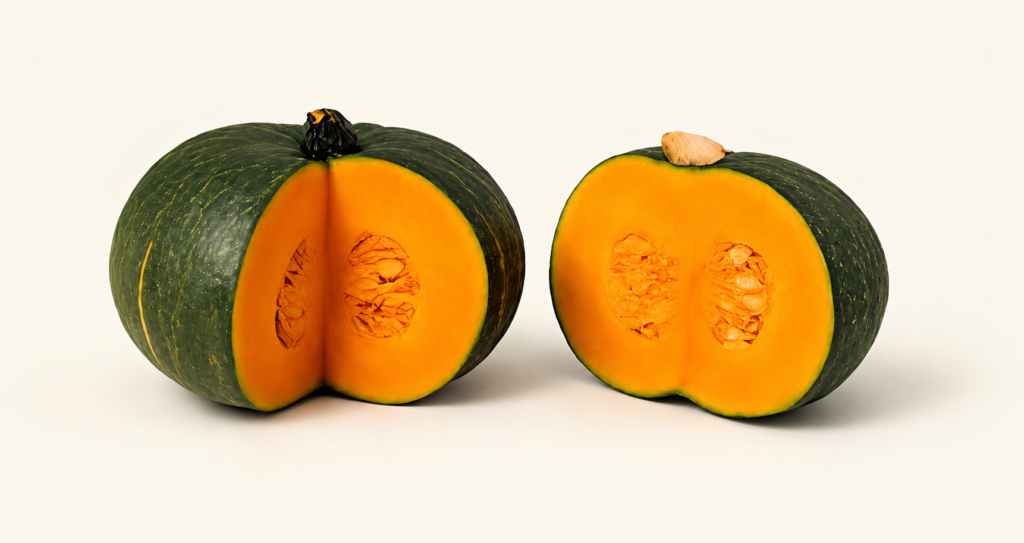
Delica is a kabocha-type pumpkin widely grown in Italy. Its dark green rind protects dense, deep-orange flesh with a naturally sweet, chestnut-like flavour. The flesh is relatively dry and holds its shape well, making it useful in many dishes.
Roast it in wedges with olive oil and herbs, fold it into risotto, or use it as a filling for ravioli and tortelli. It also makes a smooth soup with stock and seasoning. Its flavour can stand on its own.
Chestnuts: An Autumn Staple

Chestnuts have a long place in Italian food traditions, especially in areas with a long chestnut-growing tradition. Unlike most nuts, they are relatively low in fat and contain more starch, giving them a soft texture and gentle sweetness when cooked.
Roasting is a familiar way to enjoy them, but chestnuts are also useful in savoury dishes. Add them to soups, pair them with mushrooms, stir them into stuffings or purée them for desserts. Their earthy sweetness works especially well with sage, rosemary and root vegetables.
Fresh chestnuts are seasonal and need careful handling. Choose firm nuts that feel heavy for their size, keep them cool and use them promptly.
Cipolline Borettane: Small Onions With a Sweet Finish
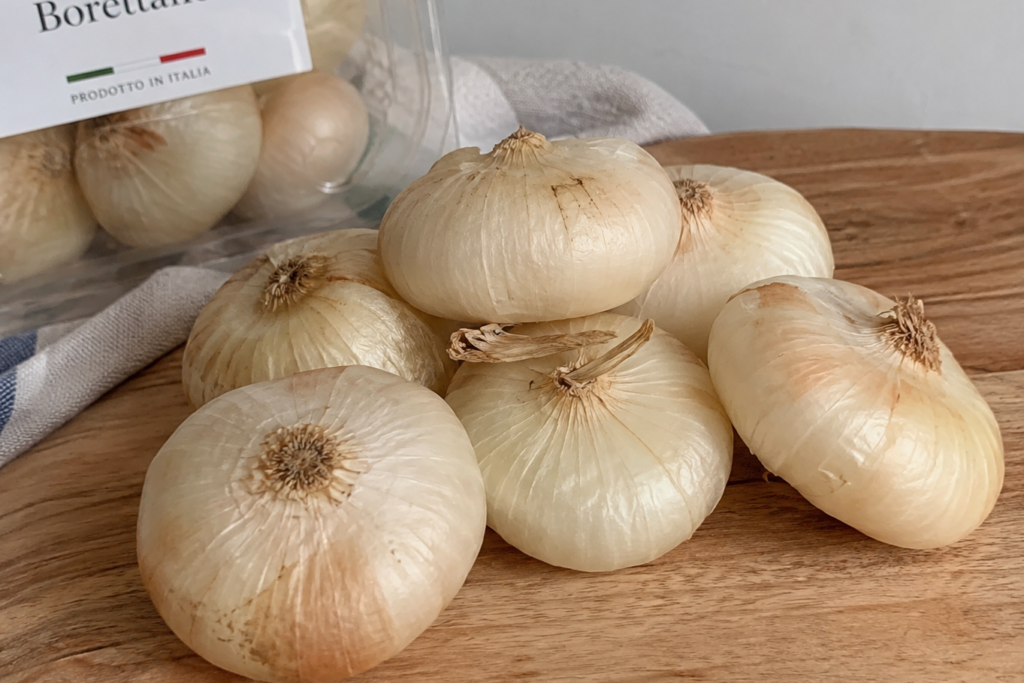
Cipolline Borettane are small, flattened onions traditionally associated with Boretto in Emilia-Romagna. Their mild sweetness makes them excellent for roasting, grilling or slow braising.
A classic Italian preparation is cipolline in agrodolce, where the onions are cooked with a balance of sweet and sour flavours. They also accompany roasted vegetables, meat and cheese.
Seasonality Does Not Always Mean Buying Locally
Local sourcing and seasonal eating are connected, but they are not identical. Produce grown in one region can be in season while being supplied to customers elsewhere. What matters is knowing its origin, harvest window, handling and availability.
For importers, distributors and restaurants, this information supports better purchasing and menu decisions. It also creates opportunities to introduce customers to regional varieties and unfamiliar ingredients. A reliable supplier should be able to explain where produce comes from and when fresh supply is expected.
Make the Most of What Is in Season
Ask suppliers what is currently at its best, then choose preparations that suit each ingredient. Roast dense vegetables, use tender leaves in salads or quick sautés, and let naturally sweet produce bring balance to savoury dishes. Planning around availability can also help kitchens reduce last-minute substitutions and keep menus interesting.
Seasonal eating is about paying attention to the food on the plate. It connects ingredients to the places and conditions in which they grow, while giving cooks a reason to explore new flavours and traditional preparations.
The exact harvest window can vary by growing region and supplier. Understanding these differences helps businesses plan purchases around actual availability rather than relying on a fixed seasonal calendar.
At BellaVita Foods, understanding produce, its origins and its culinary uses is part of helping food businesses discover ingredients with character. Explore the selection at bellavitafoods.com.